
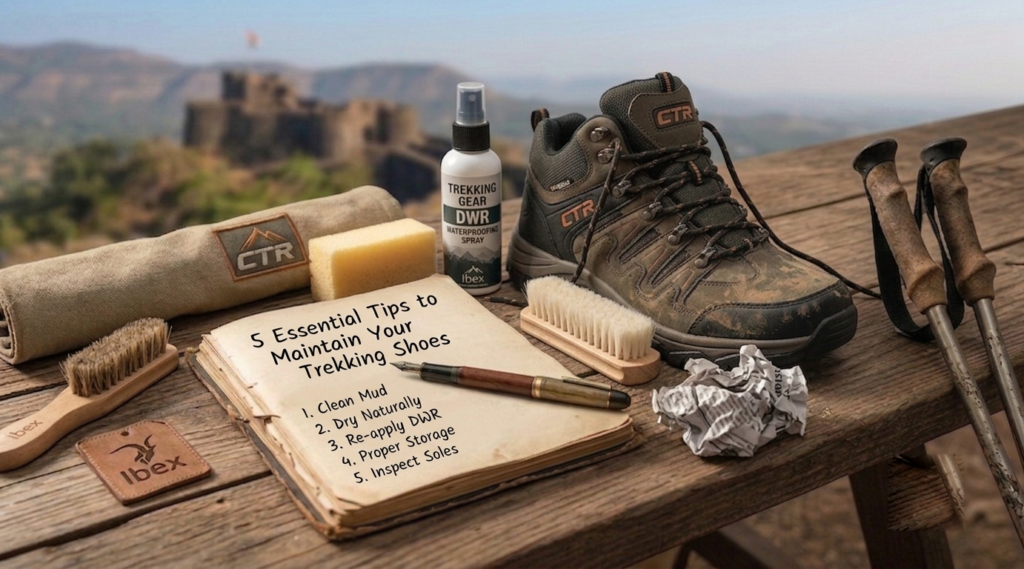
A high-performance pair of trekking shoes is one of the most critical investments any outdoor enthusiast can make. Whether you are navigating the damp, muddy trails of the Western Ghats during the monsoon season or tackling rocky terrain across high-altitude paths, your boots take a heavy beating. Without proper post-trek care, harsh grime, moisture, and friction will quickly degrade the materials, leading to cracked leather, peeling soles, and compromised waterproofing. Following a structured maintenance routine ensures your footwear remains durable, comfortable, and trail-ready for years to come.
- Clean Off Trail Mud Immediately
Leaving wet mud or fine soil to dry on your boots is the fastest way to ruin them. Dried dirt draws moisture out of synthetic fabrics and leather, rendering the material stiff, brittle, and prone to cracking.
- The Scrub Routine: Unlace the boots completely, pull out the footbeds, and use a soft-bristle brush or sponge with lukewarm water to remove caked-on dirt.
- Avoid Harsh Detergents: Never use household laundry powders, dish soap, or bleach, as these strip away essential factory-applied coatings and ruin breathable inner linings.
2. Air-Dry Naturally—Avoid Direct Heat Sources
It is tempting to place wet hiking boots near a campfire, right under a room heater, or directly in scorching midday sunlight to speed up drying. However, extreme direct heat breaks down the chemical adhesives holding the sole to the upper, warps footbeds, and shrinks leather uppers.
- Safe Drying : Stuff your wet shoes with plain crumpled newspaper to absorb internal dampness.
- Ventilation Matters : Place the shoes in a well-ventilated, shaded area and swap out the damp newspaper every few hours until completely dry.
3. Revitalize the Waterproofing Coating (DWR)
Most modern hiking boots feature a Durable Water Repellent (DWR) coating that forces water droplets to bead up and roll right off the outer fabric. Over time, friction from trail brush and dirt accumulation weakens this protective barrier.
- Testing Protection: If water begins soaking into the surface fabric rather than beading off, it is time to reapply waterproofing.
- Re-application: Thoroughly clean the shoes first, then apply a specialized footwear conditioning spray or wash-in waterproofer designed specifically for leather or synthetic mesh materials while the boot is still slightly damp.
4. Practice Proper Long-Term Storage
How you store your footwear between adventure trips plays a massive role in its lifespan. Tossing dirty boots into plastic bags or dark, unventilated closets invites mold, mildew, and premature outsole hydrolysis—a process where rubber soles degrade and crumble due to trapped humidity.
- Environment: Always store your boots in a cool, dry place away from direct sunlight.
- Shape Retention: Insert shoe trees or stuff them loosely with dry paper to help retain their natural shape during extended periods of disuse.
5. Inspect and Repair the Soles Early
Regularly check the outsoles for uneven tread wear, loose stitching, or minor sole separation along the rand. Catching minor wear early allows you to address seam repairs or get the boots professionally resoled before severe damage occurs mid-trek.
Visit CTR Shoes Store in Pune
Keep your gear in peak condition or upgrade to trail-tested footwear built for extreme endurance. Visit CTR Shoes Store (Ibex Adventure Gear Hub) located in Central Business District, 1st Floor, Adventure Mile, Pune, to explore our high-performance trekking shoes, cleaning kits, and waterproofing accessories.