
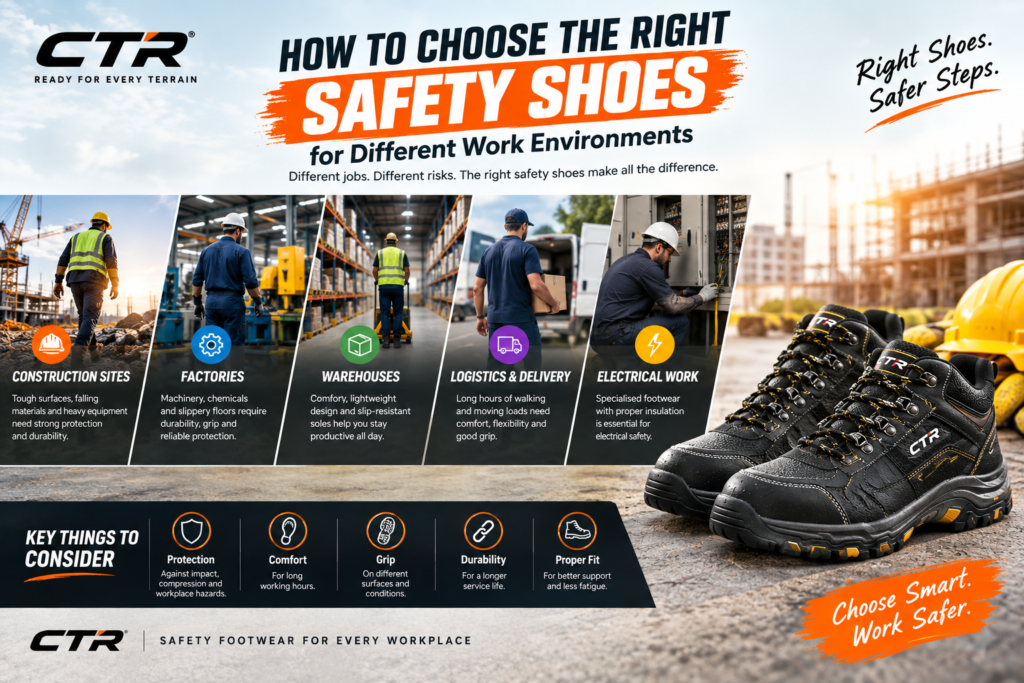
Not every workplace has the same risks. Construction workers, factory employees, warehouse teams, electricians, and logistics professionals may all require different types of protective footwear.
Choosing safety shoes based on the working environment can help provide the right combination of protection, comfort, and performance.
Safety Shoes for Construction Sites
Construction sites may involve uneven surfaces, falling materials, nails, concrete, and heavy equipment.
Workers should consider footwear with:
- Strong toe protection
- Durable construction
- Slip-resistant soles
- Good ankle and foot support
- Strong outsole grip
Safety Shoes for Factories
Factory workers may encounter machinery, heavy materials, oil, chemicals, and slippery floors.
Safety footwear for factory environments should focus on durability, grip, comfort, and appropriate protection for the specific workplace hazards.
Safety Shoes for Warehouses
Warehouse employees often walk and stand for extended periods while handling materials and moving goods.
Comfort becomes especially important. Look for:
- Lightweight construction
- Comfortable cushioning
- Slip-resistant soles
- Toe protection
- Flexible design
Safety Shoes for Logistics & Delivery Work
Logistics professionals may spend a significant amount of time walking, loading, and unloading products.
A comfortable and durable pair with good grip can help workers manage their daily activities more comfortably.
Safety Shoes for Electrical Work
Electrical work requires footwear selected according to the specific electrical hazards involved. Workers should check the applicable workplace requirements and choose footwear designed and rated for those conditions.
Why Fit Matters
Even a highly protective safety shoe may become uncomfortable if it does not fit properly. When choosing footwear, consider:
- Correct shoe size
- Toe space
- Heel fit
- Overall comfort
- Weight of the shoe
- Type of socks normally worn