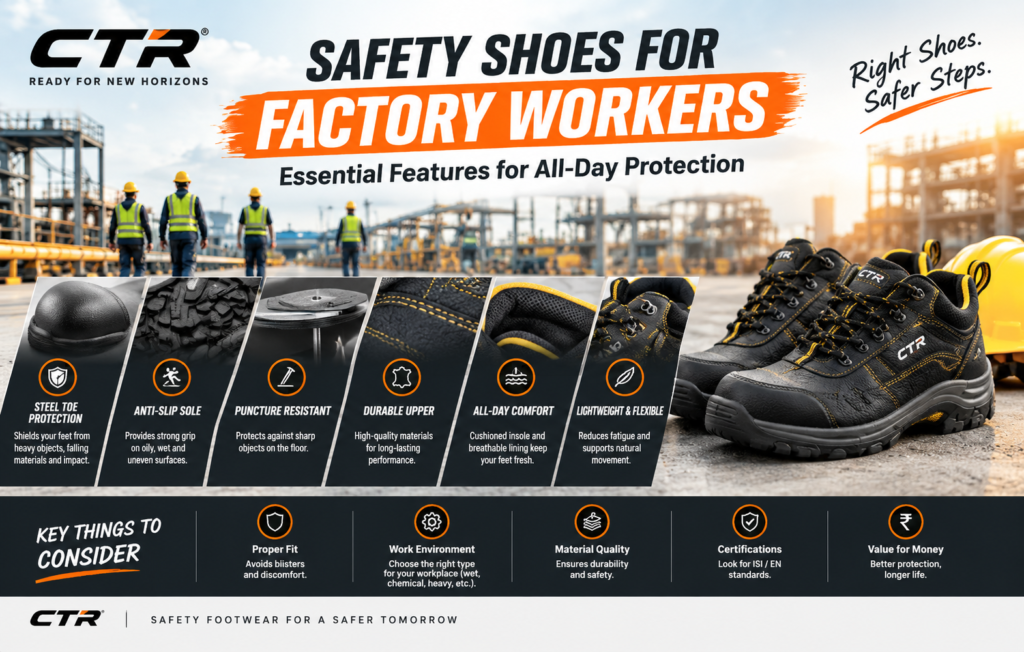
Factory workers spend long hours on their feet while working around machinery, heavy materials, tools, chemicals, and other workplace hazards. In such environments, regular footwear may not provide enough protection. The right pair of safety shoes for factory workers can help protect the feet from injuries while also providing comfort and stability throughout the workday.
Choosing safety footwear is not only about protection. Factory workers also need shoes that are durable, comfortable, slip-resistant, and suitable for the specific conditions of their workplace.
Why Are Safety Shoes Important for Factory Workers?
Factories can have several potential hazards, including falling objects, sharp materials, slippery floors, heavy equipment, and uneven surfaces. A suitable pair of industrial safety shoes provides an additional layer of protection between the worker’s feet and these hazards.
Wearing appropriate safety footwear can help reduce the risk of:
- Foot injuries caused by falling objects
- Slips and falls on wet or oily floors
- Puncture injuries from sharp objects
- Foot fatigue during long working hours
- Injuries caused by accidental impact
- Discomfort caused by unsuitable footwear
For workers who spend 8 to 10 hours or more on their feet, the right safety shoes can make a significant difference in both safety and comfort.
Essential Features to Look for in Factory Safety Shoes
Not all safety shoes are designed for the same working conditions. Before choosing footwear, workers and employers should consider the hazards present in their workplace.
1. Strong Toe Protection
One of the most important features of industrial safety footwear is toe protection. Factories often involve the movement of heavy equipment, tools, boxes, and materials.
Safety shoes with a protective toe cap can help protect the toes from accidental impact and compression.
Depending on the workplace requirements, workers may choose footwear with steel, composite, or other suitable protective toe caps.
2. Slip-Resistant Sole
Factory floors can become slippery because of water, oil, grease, dust, or other substances. A slip-resistant outsole provides better grip and helps workers maintain stability while walking or working.
This is particularly important for workers in manufacturing units, warehouses, workshops, and other industrial environments.
3. Durable Construction
Factory footwear needs to withstand regular use and demanding working conditions. Shoes made with durable materials and strong construction can provide better resistance to everyday wear and tear.
Look for features such as:
- Strong upper materials
- Reinforced stitching
- Durable outsoles
- Strong toe construction
- Quality finishing
A durable pair of safety shoes can be a practical long-term investment for workers who use them every day.
4. Comfortable Fit
Protection is important, but comfort should not be overlooked.
Factory workers may spend most of their shift standing, walking, lifting, or moving between different work areas. Poorly fitting shoes can cause discomfort, pressure points, blisters, and foot fatigue.
When selecting safety shoes, make sure they:
- Fit properly around the foot
- Provide enough toe room
- Do not feel excessively tight
- Offer suitable cushioning
- Provide good heel support
The best safety shoes are those that allow workers to stay protected without compromising everyday comfort.
5. Puncture Resistance
Factories and workshops may have sharp metal pieces, nails, wires, or other objects on the floor. In workplaces where puncture hazards are present, safety footwear with a suitable puncture-resistant layer can provide additional protection from sharp objects.
This feature can be especially useful in construction-related manufacturing, engineering workshops, warehouses, and industrial sites.
6. Water and Oil Resistance
Depending on the factory environment, workers may come into contact with water, oil, grease, or other liquids.
Water-resistant or suitable protective footwear can help keep feet more comfortable in wet conditions, while oil-resistant soles can provide better traction in workplaces where oil and grease are present.
However, workers should always select footwear based on the specific substances and hazards present in their workplace.
How to Choose the Right Safety Shoes for a Factory Environment
Before buying safety shoes, consider the type of work being performed and the hazards workers face every day.
Manufacturing Units
Manufacturing environments may involve machinery, tools, metal components, and heavy materials. Toe protection, durability, and slip resistance are important considerations.
Warehouses
Warehouse workers frequently walk, lift, and move materials. Comfortable, lightweight, slip-resistant safety footwear can be particularly useful for long shifts.
Engineering Workshops
Workshops may involve sharp metal components, machinery, tools, oil, and other hazards. Depending on the work environment, workers may require toe protection, puncture resistance, and oil-resistant soles.
Heavy Industrial Areas
Heavy industrial environments may involve greater impact and compression risks. Workers should select safety footwear designed to meet the specific protection requirements of their workplace.
Comfort Matters as Much as Protection
Safety shoes should not simply protect the feet; they should also support workers throughout their shift.
A comfortable safety shoe can help reduce unnecessary foot strain and make long working hours more manageable. Features such as appropriate cushioning, proper fitting, breathable materials, and supportive construction can improve the overall wearing experience.
When employees are comfortable, they can move more confidently and focus better on their work.
How to Maintain Your Safety Shoes
Regular maintenance can help extend the life of your safety footwear.
Follow these simple practices:
- Clean dirt and dust regularly.
- Allow shoes to dry properly if they become wet.
- Avoid exposing them to unsuitable chemicals.
- Check the sole regularly for excessive wear.
- Inspect stitching and upper materials for damage.
- Replace footwear when important protective features are compromised.
Safety shoes should also be replaced when they no longer provide the level of protection required for the job.
Why Choosing the Right Safety Footwear Matters
Safety shoes are an important part of workplace personal protective equipment (PPE). However, there is no single pair that is ideal for every factory environment.
The right footwear depends on factors such as:
- Type of work
- Workplace hazards
- Floor conditions
- Required protection level
Working hours - Weather and environmental conditions
- Comfort and fitting requirements
Employers should assess workplace risks and ensure workers have appropriate PPE for their specific tasks.
Choose Reliable Safety Footwear with CTR Shoes
At CTR Shoes, safety footwear is designed with the needs of industrial and professional workers in mind. From everyday factory operations to demanding industrial environments, choosing the right safety footwear can help workers stay protected and comfortable throughout their working day.
Whether you work in a factory, warehouse, workshop, manufacturing unit, or industrial facility, selecting safety shoes based on your workplace requirements is an important step toward better foot protection.
Choose the right protection. Choose the right comfort. Choose CTR Shoes.
Frequently Asked Questions
What are the best safety shoes for factory workers?
The best safety shoes depend on the hazards in the workplace. Important features may include protective toe caps, slip-resistant soles, durability, comfort, and puncture or oil resistance where required.
Are safety shoes comfortable for long working hours?
Yes. Modern safety shoes are available with cushioning, supportive construction, breathable materials, and ergonomic designs that can provide better comfort during long shifts.
Why are slip-resistant soles important in factories?
Factory floors can contain water, oil, grease, or dust. Slip-resistant soles can provide better traction and help reduce the risk of slips and falls.
How often should factory workers replace safety shoes?
There is no fixed replacement period. Safety footwear should be inspected regularly and replaced when the sole, toe protection, stitching, or other important protective components become damaged or excessively worn.
Can safety shoes be used for warehouse work?
Yes. Safety shoes are commonly used in warehouses where workers may handle heavy materials, operate around equipment, or face risks from falling objects and slippery surfaces.
Final Thoughts
For factory workers, safety footwear is more than just part of a uniform. It is an important part of workplace protection. The right pair of safety shoes can provide protection from common hazards while offering the comfort and support needed for long working hours.
Before choosing a pair, always consider the specific risks of your workplace and select footwear that matches those requirements.
CTR Shoes — protection, comfort, and confidence for every working day.