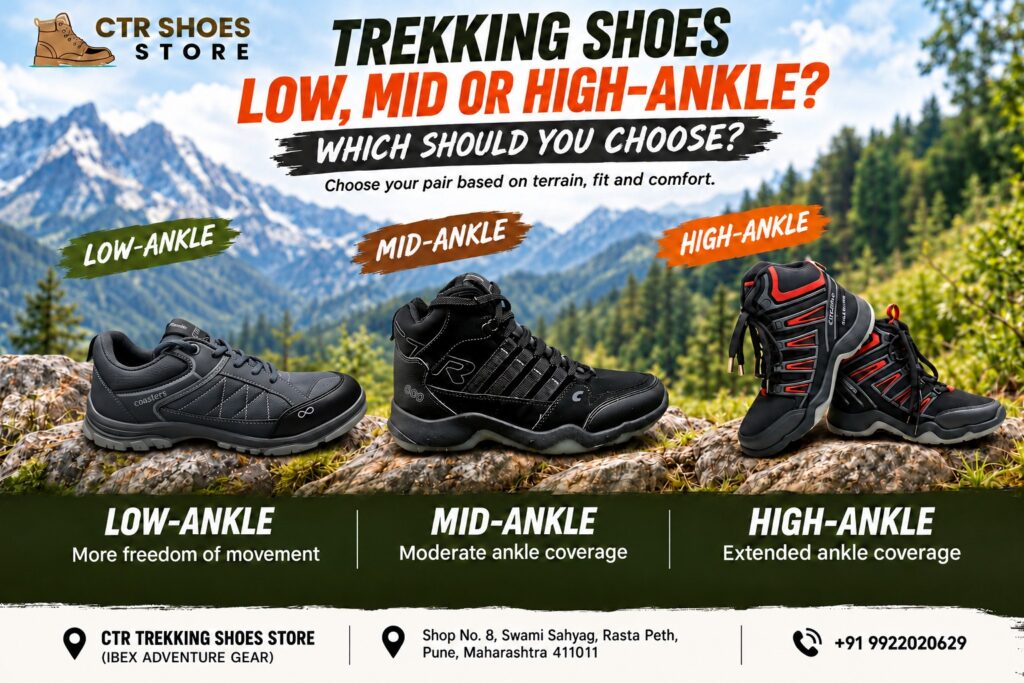
Choosing trekking shoes is easier when you know what kind of trail you’ll walk and what feels comfortable on your feet. Low-ankle shoes feel more open and flexible, mid-ankle shoes offer more coverage, and high-ankle shoes have a taller collar around the ankle.
There isn’t one style that suits every trekker. Consider the terrain, the shoe’s fit, its grip and how much ankle coverage you prefer.
What does ankle height mean?
Ankle height refers to how high the shoe’s upper rises around your ankle. Low-ankle trekking shoes sit below the ankle. Mid-ankle shoes rise closer to it, while high-ankle trekking shoes extend farther up.
The exact height and feel can vary by brand and model. The shoe’s material, collar shape and stiffness also affect comfort and movement.
Low-ankle trekking shoes
Low-ankle trekking shoes leave the ankle more open. Many people prefer them for their lighter, more flexible feel.
They may suit:
- Day hikes and shorter walks
- Easier, well-marked trails
- Trekkers who prefer more freedom around the ankle
- Walks where a flexible shoe feels comfortable
Check the outsole and overall fit too. A low collar by itself doesn’t tell you how much grip or cushioning the shoe provides.
Mid-ankle trekking shoes
Mid-ankle trekking shoes offer a balance between an open, low-cut design and a taller collar. They provide more coverage than low-ankle shoes while allowing movement around the ankle.
They may suit:
- Mixed terrain
- Day hikes with both easy and rough sections
- Trekkers who want some ankle coverage without a tall collar
Make sure the collar feels comfortable. It should not rub, pinch or press uncomfortably against your ankle.
High-ankle trekking shoes
High-ankle trekking shoes extend farther around the ankle. The taller collar may feel more structured and provide more coverage from trail debris. Depending on its design, the shoe may also allow less ankle movement.
They may suit:
- Rough or uneven trails
- Longer walks where you prefer more ankle coverage
- Trekkers who like a taller, more structured shoe
- Some hikes with a backpack, depending on the trail and your comfort
A high collar does not automatically prevent ankle injuries. Research suggests that shoe shaft height and stiffness can affect ankle movement, but the relationship between shoe height and injury risk is not settled. Choose trekking shoes based on the route, fit and comfort as well as ankle height.
Low vs. mid vs. high-ankle trekking shoes
| Type | General feel | May suit |
Low ankle | More open and flexible around the ankle | Easier trails and lighter hikes |
Mid ankle | A balance of coverage and movement | Mixed terrain and day hikes |
High ankle | More ankle coverage; may feel more structured | Rougher trails or trekkers who prefer a taller collar |
These are general differences, not strict rules. Two shoes with the same ankle height can feel very different because of their fit, material, sole and stiffness.
How to choose trekking shoes for hiking
1. Consider the trail
Think about the surface, distance and conditions you expect. A short walk on a maintained trail may call for a different shoe from a long route over uneven ground.
2. Check the grip and sole
Look at the outsole pattern and how the shoe feels underfoot. Choose a sole that suits the terrain. Ankle height alone does not determine a shoe’s grip.
3. Find a comfortable fit
Try the shoes with the socks you plan to wear while trekking. Your heel should feel secure, and your toes should have room to move. Walk around and check for rubbing, pinching or pressure near the ankle
4. Think about weight and flexibility
A shoe that feels too heavy or stiff may become uncomfortable during a long walk. A flexible pair may feel better on easier hikes, while some trekkers prefer a more structured design for rougher routes.
5. Check the product specifications
Check the size range, material, care instructions and any water-resistance claims on the product page. Don’t assume every pair of trekking shoes is waterproof; confirm the specification for the exact model.
Which trekking shoes should you choose?
Choose low-ankle trekking shoes if you prefer a lighter, more open feel for easier hikes. Consider mid-ankle trekking shoes if you want a balance of coverage and movement. High-ankle trekking shoes may suit you if you prefer a taller, more structured collar for rougher routes.
When comparing trekking shoes for hiking, consider the fit, grip, weight and expected trail conditions—not ankle height alone. The right pair is the one that feels comfortable and suits your route.
Explore the CTR trekking shoes collection to compare available models, sizes and product details.
Frequently asked questions
Which trekking shoes are best for beginners?
The best pair depends on the trail and your comfort. For easier hikes, some beginners prefer the lighter feel of low-ankle shoes. For rougher routes, they may prefer more ankle coverage. Try the fit and check the sole before choosing.
Are high-ankle trekking shoes better than low-ankle shoes?
Neither is best for everyone. High-ankle shoes provide more coverage and may feel more structured. Low-ankle shoes leave the ankle more open and may feel lighter and more flexible.
Do high-ankle trekking shoes prevent ankle injuries?
No shoe height can guarantee injury prevention. Fit, terrain, shoe construction and how you walk also matter. Research on the relationship between shaft height and ankle injury risk remains inconclusive.
Are low-ankle trekking shoes suitable for hiking?
They can be suitable for easier trails and day hikes, especially if you prefer a lighter, more flexible feel. Check that the fit and outsole suit your planned route.
What are mid-ankle trekking shoes good for?
Mid-ankle shoes offer a balance between a low-cut shoe’s open feel and a high-cut shoe’s added coverage. They may suit hikers looking for a versatile option for mixed terrain.