
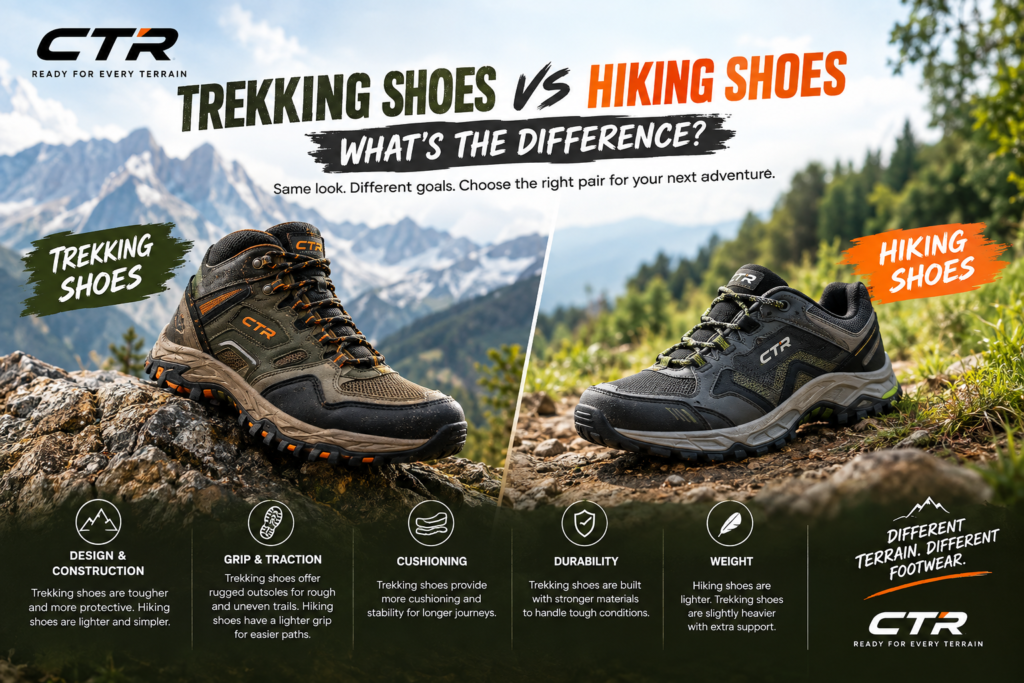
When planning an outdoor adventure, choosing the right footwear can make a big difference to your comfort and stability. Trekking shoes and hiking shoes may look similar, but they are designed for different types of outdoor activities and terrain.
If you’re confused about which one to choose, understanding their key differences can help you make the right decision.
1. Design and Construction
Trekking shoes are generally designed for more demanding outdoor conditions. They often feature durable construction, stronger soles, and additional protection for challenging trails.
Hiking shoes are usually lighter and designed for shorter hikes, walking trails, and less demanding terrain.
2. Grip and Traction
Good traction is important when walking on uneven or slippery surfaces.
Trekking shoes generally feature rugged outsoles designed to provide better grip on rocky, uneven, and challenging trails. Hiking shoes may have a lighter outsole suitable for relatively easier paths.
3. Comfort and Cushioning
For longer outdoor journeys, cushioning plays an important role.
A well-designed trekking shoe should provide adequate cushioning under the foot while maintaining stability. This can help make long walks more comfortable.
4. Durability
Trekking routes can expose footwear to rocks, dirt, mud, and rough surfaces.
Because of this, trekking shoes are often built using durable materials that can withstand repeated outdoor use.
5. Weight
Hiking shoes are generally lighter, making them suitable for people who prefer lightweight footwear for shorter walks and easier trails.
Trekking shoes can be slightly heavier because they may include additional support and protection.
6. Which One Should You Choose?
Your choice should depend on the type of adventure you are planning.
Choose trekking shoes when you need:
- Strong traction
- Better protection
- Durable construction
- Stability on uneven terrain
- Footwear for longer or challenging trails