Do your sports shoes still look good but no longer feel comfortable? Shoes can lose cushioning, grip, and structural support even when the upper material appears to be in good condition.
Knowing when to replace your footwear helps you choose shoes that are suitable for your activities. Here are seven signs that it may be time to invest in a new pair.
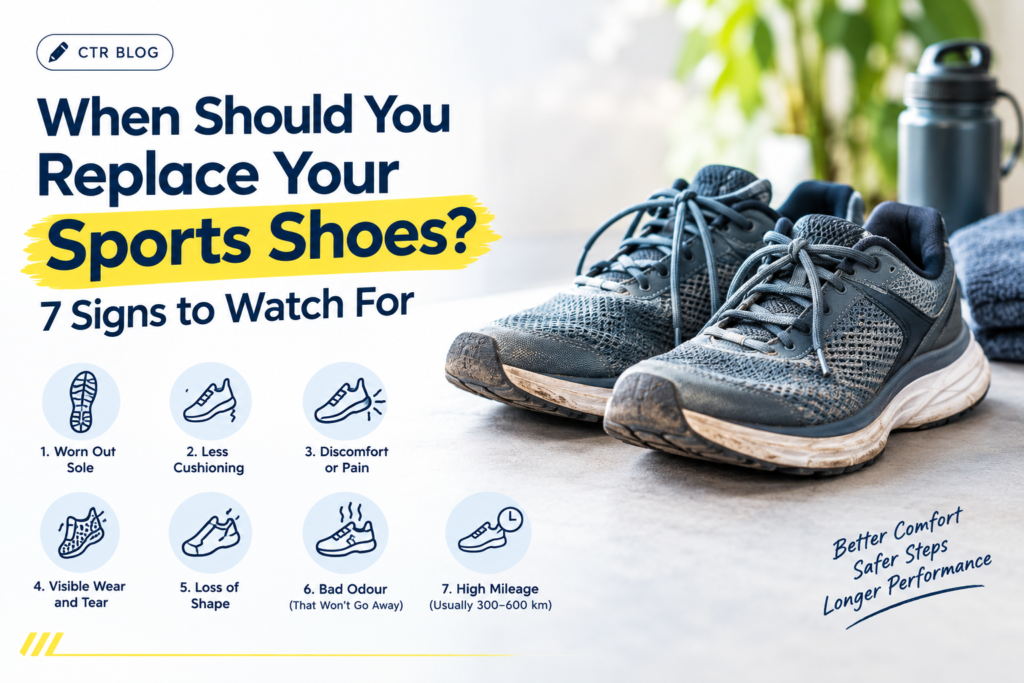
1. The Sole Is Worn Out
Check the bottom of your shoes for uneven tread, smooth patches, or worn-down areas. Reduced tread can affect traction, particularly on wet or slippery surfaces.
2. The Cushioning Feels Different
If your shoes feel noticeably flatter or less comfortable than when you first bought them, the cushioning may have deteriorated
3. You Notice Uneven Wear
Inspect both shoes. Significant differences in wear patterns or a visibly tilted sole may indicate that the footwear is no longer functioning as intended.
4. The Shoes Have Lost Their Shape
A stretched upper, loose heel, damaged structure, or persistent deformation may affect the fit and stability of your shoes.
5. The Grip Has Reduced
Sports shoes need appropriate traction for their intended activity. If the outsole is worn smooth or the tread is damaged, consider replacing the pair.
6. The Shoes Cause New Discomfort
Blisters, rubbing, or discomfort may indicate a fit problem or worn footwear. However, pain can have other causes, so persistent discomfort should be assessed by a qualified healthcare professional.
7. You Have Used Them Extensively
Replacement depends on the shoe type, your activity, running distance, body weight, and the surfaces you use. For running shoes, a commonly cited guideline is approximately 300–500 miles, or around 480–800 kilometres, although individual shoes can wear out sooner or last longer.
How to Make Your Sports Shoes Last Longer
- Use shoes for their intended activities.
- Allow them to dry fully between uses.
- Clean them according to the manufacturer’s instructions.
- Avoid excessive heat when drying.
- Check the outsole and cushioning regularly.
Frequently Asked Questions
1. How long do sports shoes usually last?
Their lifespan depends on usage, materials, construction, and activity. Check for wear rather than relying only on the purchase date.
2. Can I continue wearing sports shoes with worn soles?
Worn soles may reduce traction and stability. Replace shoes when the wear affects their intended function.
3. Do sports shoes need replacing if they look new?
Not necessarily, but appearance alone does not tell you whether cushioning and support have deteriorated.
4. Can I use running shoes for gym workouts?
It depends on the workout. Running shoes are designed primarily for forward movement, while some gym exercises require greater lateral stability.
5. How can I check whether my shoes are still in good condition?
Inspect the outsole, compare cushioning and comfort with how the shoes felt originally, and check for damage or changes in fit.